
Why All‑on‑4 Dental Implants in Perth Can Transform Your Quality of Life
Key Takeaways
- All-on-4 uses four dental implants to support a fixed full-arch bridge, giving a stable alternative to loose dentures.
- Many patients can move from slipping plates and food limitations to more confident, comfortable chewing after healing.
- Recovery involves several months of healing and a soft diet, so realistic expectations and good aftercare are essential.
- All-on-4 is not suitable for everyone; medical history, bone levels, and lifestyle all need careful assessment.
- Long-term success depends on excellent cleaning, regular professional maintenance, and ongoing support from your dental team.
All-on-4 Dental Implants Perth: A Fixed Full-Arch Solution for Better Daily Life
When you live with multiple missing or failing teeth or a denture that never quite feels secure, it affects far more than your mouth. Meals become stressful, photos feel awkward, and social situations can trigger constant worry about movement or pain. All-on-4 dental implants are designed for people who are ready for a more stable, fixed full-arch solution. At our Applecross clinic in Perth’s southern suburbs, we focus on how All-on-4 can change your day-to-day quality of life—not just your X-rays—while being honest about the surgery, recovery, and maintenance involved.
What All-on-4 Is – and Who It’s Designed For
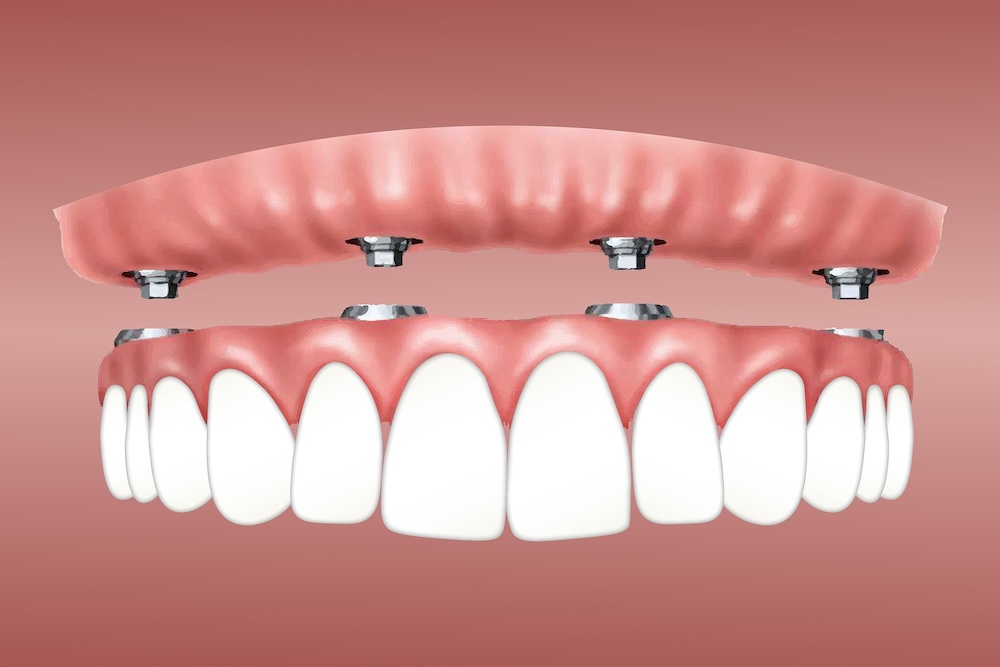
All-on-4 is a full-arch dental implant treatment where four titanium implants are placed in the jaw to support a fixed bridge of teeth. Instead of one implant per tooth, the four implants are positioned in a way that allows them to support an entire arch, often even when there has been some bone loss.
For many patients, All-on-4 is considered when:
- They are frustrated with loose or uncomfortable dentures.
- Several teeth are mobile, heavily restored, or failing.
- They have been told they may soon need extractions of most or all teeth.
- They want a definitive, long-term solution rather than ongoing “patch-up” dentistry.
In suitable cases, a provisional fixed bridge can be attached one to two days after surgery, which means you are not left without teeth during healing. Over the next three to six months, the implants undergo osseointegration—the process where bone heals and bonds to the implant surface. Once this is confirmed, a custom final bridge (often reinforced acrylic or zirconia) is fitted.
Healthdirect Australia notes that dental implants can feel and function like natural teeth, helping you eat and speak more comfortably when treatment is carefully planned and maintained over time, although individual outcomes vary and no treatment is without risk. Healthdirect
How All-on-4 Changes Daily Life Compared with Dentures
For many denture wearers, the biggest frustrations are instability, rubbing, and having to avoid certain foods. With a well-integrated All-on-4 full-arch bridge, the teeth are fixed to the implants. You do not take them in and out at home; instead, you clean them in your mouth, much like natural teeth.
This stability can change everyday life in several ways. Chewing often feels more confident once healing has progressed. Foods that were once almost impossible with a loose denture—crusty bread, firmer meats, many raw salads—may become realistic options again, provided your dentist has cleared you to return to a normal diet. Because the bridge does not lift or rock, you no longer rely on denture adhesives, and it is usually easier to speak without worrying about clicking or slipping at important moments.
There is also a significant emotional and social side. Many patients describe feeling more comfortable smiling in photos, accepting invitations to restaurants, or speaking in meetings without mentally checking whether their denture is in the right place. Instead of constantly thinking about their teeth, they can gradually treat them more like a normal part of daily life.
It is important to remember that this confidence builds over time. In the first weeks, you will be on a soft diet, learning new cleaning routines, and getting used to speaking with the provisional bridge. As adjustments are made and your final bridge is fitted, most people find that All-on-4 offers a more natural-feeling, low-drama experience than the dentures they lived with for years.
The All-on-4 Journey at Our Applecross Clinic (Timeline and Experience)
Because All-on-4 is a significant procedure, having a clear roadmap helps you feel prepared.
Your journey typically starts with a discovery consultation. We take time to understand your concerns, medical history, and goals. Dr Lily examines your teeth, gums, and bite, and, where clinically indicated, arranges a CBCT (Cone Beam CT) scan to assess bone levels and the position of nerves and sinuses. We then talk through suitable options—not just All-on-4—along with risks, timeframes, and investment.
Next comes digital planning. Using specialised software and 3D data, we map implant positions and design both provisional and final bridge plans. Because Dr Lily is a Master in Digital Smile Design, this planning is not only about fitting teeth into bone; it is about creating a smile that suits your face, lips, and personality. You may see simulations to understand the intent, with the understanding that final results always depend on clinical findings and healing.
On surgery day, you arrive a little early for relaxed preparation. Depending on your needs and medical history, we use local anaesthesia with or without IV sedation, provided by an experienced dental anaesthetist where appropriate. Unsalvageable teeth are removed, the four implants are placed in their planned positions, and, in suitable cases, a fixed provisional bridge is fitted within one to two days. You leave with detailed written aftercare instructions and clear review arrangements.
Over the next three to six months, the implants integrate with your jawbone. A soft diet is usually recommended for at least the early stages of this period. We schedule reviews to monitor healing and make adjustments to the provisional bridge as your bite settles. Once integration is confirmed, we take digital scans or impressions and work with trusted Perth dental laboratories to create your custom final bridge. Fitting may involve try-ins to fine-tune shape, colour, and bite before final placement.
Who Is (and Isn’t) a Good Candidate for All-on-4?
All-on-4 can be a life-changing treatment, but it is not right for everyone. A careful assessment of your general health, oral health, bone levels, and expectations is essential.
People who are often suitable include those who are tired of unstable dentures, have multiple loose or failing teeth, or feel embarrassed by visible tooth movement. They are usually in reasonably good general health, committed to keeping their mouth clean, and realistic about the time and care involved. Non-smokers—or people genuinely motivated to quit—tend to have a lower risk of healing complications.
Some situations need extra caution, or sometimes clearance from your medical team. These include uncontrolled diabetes, recent heart surgery or other major procedures, blood clotting disorders, current chemotherapy or head/neck radiation, and certain medications that affect bone metabolism. Heavy smoking and untreated severe teeth grinding can also increase the chance of problems.
There are also circumstances where All-on-4 may not be appropriate right now. Examples include active, untreated gum disease, serious, untreated anxiety that makes appointments almost impossible, and a current pregnancy. In very rare cases with extremely limited bone, even angled implants may not be feasible, and alternative approaches or specialist referrals might be recommended instead.
The aim of your consultation is not to push you towards All-on-4, but to decide together whether it is truly in your best interests, or whether another solution—such as a well-made denture, an implant-retained overdenture, or staged treatment—would better match your health, budget, and lifestyle.
All-on-4 vs Other Full-Arch Options (All-on-6, Snap-In Dentures, Conventional Dentures)
Choosing between full-arch options can feel overwhelming. Each approach balances stability, bone requirements, maintenance, and investment differently.
With All-on-4, four implants support a fixed full-arch bridge. Stability is high because the bridge is screwed to the implants rather than resting on your gums. In many cases, All-on-4 can be considered even where there has been some bone loss, because the back implants are angled to engage available bone. Daily maintenance is similar to looking after natural teeth, with brushing and specialised cleaning under the bridge.
All-on-6 is conceptually similar, using six implants instead of four. Extra implants may offer more support in certain anatomical situations, but also mean more surgery and cost. For many patients with typical bone patterns, well-planned All-on-4 offers a good balance between stability and invasiveness.
An implant-retained overdenture (snap-in denture) usually uses two to four implants with attachments that the denture clips onto. This improves stability compared with a conventional denture, especially in the lower jaw, but the denture remains removable and can still move slightly. You take it out daily for cleaning, and some bulk and coverage of the palate or ridge is still present.
A conventional full denture does not use implants at all. It relies on suction, muscle control, and, in some cases, adhesives. While it remains the least invasive and most affordable option, it often offers the least stability and can accelerate bone resorption over time, which may reduce fit.
Your “best” choice depends on your bone quality, appetite for surgery, cleaning habits, and financial comfort, not just the number of implants. Our role is to clearly explain what living with each option may feel like in daily life so you can choose the pathway that genuinely serves you.
Risks, Recovery and Long-Term Maintenance (No “Fit and Forget”)
Like all surgeries, All-on-4 involves risks and a meaningful recovery period. In the first week after surgery, discomfort, swelling, and bruising are common and often peak around 48–72 hours before easing. Most people manage symptoms with prescribed or recommended medication and careful use of cold packs. Any heavy or persistent bleeding or concerns about healing should prompt immediate contact with the clinic.
During the first few months, your bite and speech continue to adapt. Temporary altered sensation of the lips or chin can occur and may resolve over weeks to months. As swelling settles, we may adjust the provisional bridge to refine your bite and comfort. A soft-food diet is generally required in the early healing stage to protect the implants while osseointegration occurs.
Long-term, there can be complications such as implant failure, infection around the implants (peri‑implant disease), or wear and fracture of bridge components over the years. These risks are managed by careful planning, clear home-care routines, and regular professional maintenance. University research has shown that dental implants can have high long-term survival rates when appropriately selected and maintained, but no treatment offers a 100% guarantee, particularly in the presence of risk factors such as smoking or uncontrolled systemic disease.
Success with All-on-4 depends on treating your new teeth as a shared responsibility. Daily cleaning under and around the bridge, using interdental brushes or a water flosser, reduces plaque and inflamed tissues. We typically recommend professional reviews and cleaning every three to six months, adjusted to your individual needs. Smoking cessation advice, bite guards for heavy grinders, and prompt attention to any looseness or discomfort all help protect your investment.
Next Steps: Planning Your All-on-4 Consultation in Applecross
Deciding whether All-on-4 is right for you is a major step—financially, emotionally, and medically. The aim of your first consultation at our Applecross practice is not to lock you into a decision on the spot, but to educate, assess, and plan.
During your visit, we will discuss your goals, look carefully at your existing teeth and gums, and, where appropriate, arrange 3D imaging to understand your bone and nerve positions. We will explain suitable options, outline risks and likely timelines, and provide a written, itemised plan for you to consider at home or discuss with family members. We are also happy to coordinate with your GP or specialist if medical clearance is needed.
On surgery day, we help you feel as relaxed and supported as possible. Arriving about 30 minutes early allows time for last questions, review of your medical history, and preparation for local anaesthetic and, if planned, IV sedation. A responsible adult must accompany you home if you receive sedation. Before discharge, we ensure you are stable, comfortable, and confident about your aftercare instructions and review schedule.
If you are considering All-on-4 because you are tired of living with your teeth, the first step is simply to explore whether it is the right fit for you. A personalised consultation allows you to understand your options clearly and decide at your own pace. You can also find more detailed “Information on Treatment Considerations and Potential Risks” in another dedicated blog post.
Contact The Applecross Dentist to arrange an All-on-4 consultation and take the first step towards a more stable, confident smile.
Frequently Asked Questions
Is All-on-4 really worth it for my quality of life?
For many people living with loose dentures or multiple failing teeth, All-on-4 can significantly improve comfort, chewing, and social confidence once healing is complete. It is, however, a surgical treatment with meaningful cost and maintenance requirements, so it is most worthwhile when you value long-term stability and are prepared to commit to reviews and careful home care.
What is daily life like with All-on-4 compared with dentures?
After healing, most patients find All-on-4 feels more like having fixed teeth than wearing a plate. The bridge does not lift or rock, so speaking and laughing usually feel more secure, and a wider range of foods becomes realistic again. You clean around the implants and under the bridge each day, and attend regular maintenance visits, but do not remove the teeth at home.
How long does it take to feel “normal” after All-on-4 surgery?
The most intense post-operative phase usually settles over the first week, although everyone is different. Many people in desk-based jobs return to light work within several days, while those in physical roles may need more time. A soft diet is typically recommended for at least the early healing period, with a gradual return to firmer foods as your dentist advises over the following months.
Who is (and isn’t) a good candidate for All-on-4?
Good candidates usually have multiple missing or failing teeth, are unhappy with dentures, and are in reasonably good general health. They are willing to keep their mouth very clean and attend regular reviews. All-on-4 may not be appropriate for people with uncontrolled medical conditions, active gum disease, heavy smoking, certain medications, or unrealistic expectations. Careful individual assessment is always required.
How long do All-on-4 teeth last if I look after them?
With good planning, healthy healing, and excellent maintenance, dental implants can have high long-term survival rates, but bridges and components may need repairs or replacement over time. Factors such as smoking, grinding, uncontrolled diabetes, and poor cleaning can shorten the life of the implants and prosthesis. Regular professional maintenance and early attention to any changes are essential.
What are the main risks or downsides of All-on-4?
Key downsides include the need for surgery, a recovery period with swelling and a soft diet, and possible complications such as implant failure, infection, or prosthetic fractures. There is also a significant time and financial investment, plus ongoing maintenance costs. All-on-4 is not “fit and forget”; long-term success relies on your commitment to cleaning and regular professional care.
What happens if an All-on-4 implant fails?
If an implant fails to integrate or develops a problem later, it may need to be removed. Depending on the case, it might be possible to place a new implant after healing or to redesign the bridge. This is assessed on an individual basis. Your dentist will discuss contingency plans before treatment so you understand how such situations are managed if they arise.